 Vajska
Nearby · About 6 minutes by car
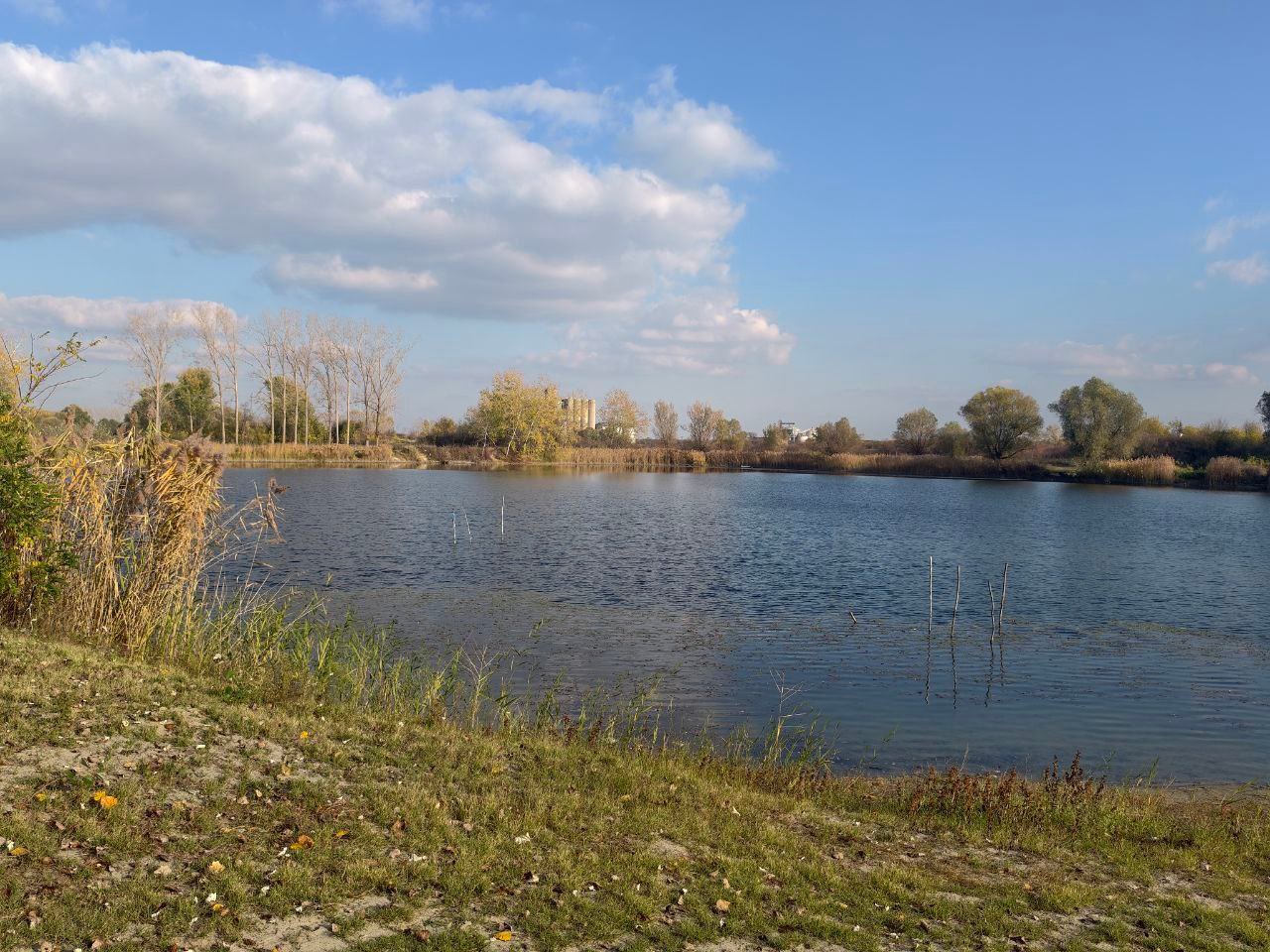
Lake Provala
The deepest lake in Vojvodina, left behind by a great Danube flood: beach, campsite and fishing.
Nearby · About 15 minutes by car
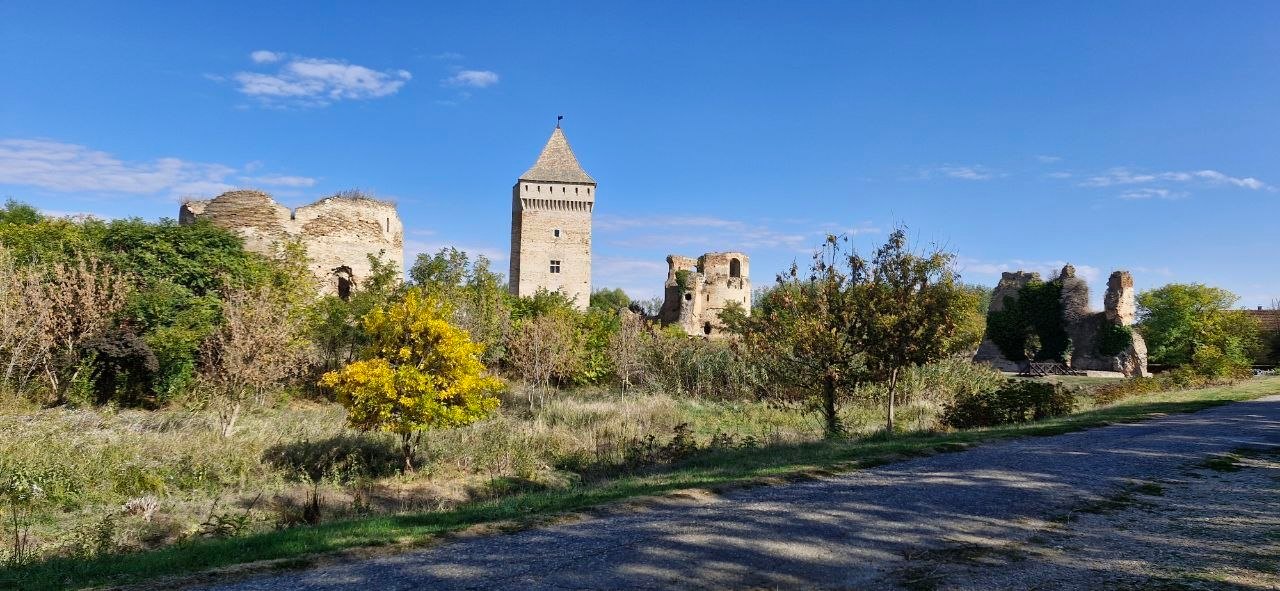
Bač gave its name to the whole of Bačka, and three monuments of the old town survive within an easy afternoon’s walk: the fortress in a bend of the old Mostonga river, the Šiljak city gate at the entrance to the former suburb, and the remains of an Ottoman bath (hamam) on the way to the centre. Since 2019 all three have been on UNESCO’s Tentative List as part of the “Cultural landscape of Bač and its surroundings” (UNESCO). Photos: Svetlana Morozova.
Bač appears in writing as early as 535, in a letter of Emperor Justinian (Vojvodina Travel). The present fortress was built mostly between 1338 and 1342, under the Hungarian king Charles Robert of Anjou, and its walls were extended and strengthened for almost two more centuries, mainly by the archbishops (Bač Tourist Organisation). It was a “water town”: the Mostonga, whose old bed is still visible, surrounded it on every side, and the way in was over a movable wooden bridge (Vojvodina Travel). Archbishop Péter Váradi had the moat dug in 1495–1501, and the last major rebuilding before the Ottoman conquest was carried out by Friar Pál Tomori in 1523–1526 (Bač Tourist Organisation).
After the Battle of Mohács the Ottomans took the town of Bač in 1526 and the fortress in 1529. The Ottoman traveller Evliya Çelebi described it in 1665. The town came through its liberation in 1686 without major damage, but during Rákóczi’s War of Independence the fortress was repeatedly wrecked and burned, and after it was blown up in 1704 it was abandoned (Bač Tourist Organisation).
The fortress plateau covers 8,700 m², the trapezoid fortress itself 5,600 m². Five projecting towers stood at the corners, linked by a rampart 2 m thick and 12 m high (Bač Tourist Organisation). Today the remains of four side towers stand, with the central keep (donjon). Sources give its height as 20 m (Wikipedia) or 22 m (Vojvodina Travel). The keep has been fully rebuilt and has five floors; archaeological finds are shown on the first and third (EU for You).
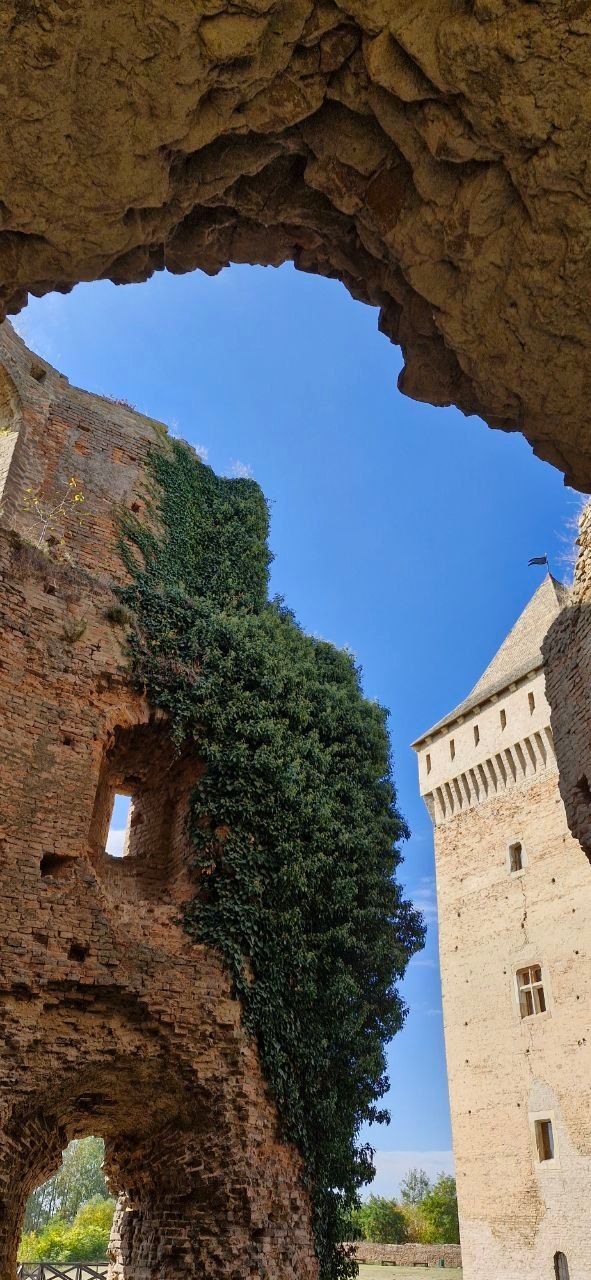
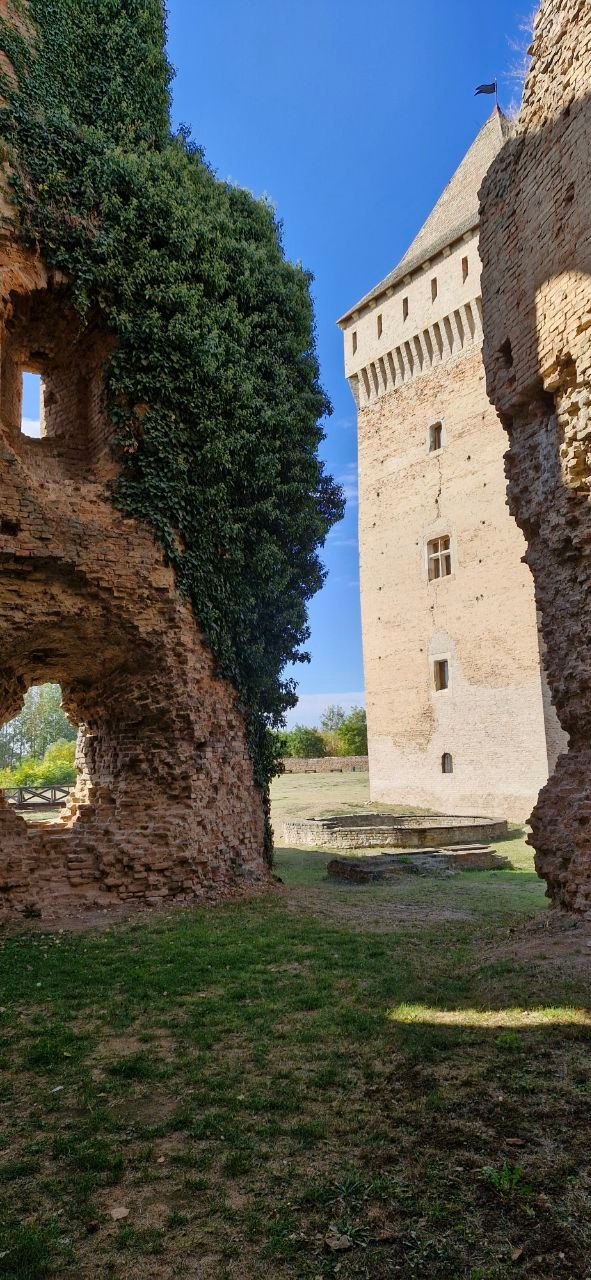
The fortress was listed as a cultural monument in 1948 (Bač Tourist Organisation). Since 2006 the Provincial Institute for the Protection of Cultural Monuments has been conserving it through the “Centuries of Bač” project, keeping the look of a ruin, and the keep now houses a visitor centre. For this work the fortress won the Grand Prix of the European Union Prize for Cultural Heritage / Europa Nostra Awards in 2018 (European Heritage Awards).
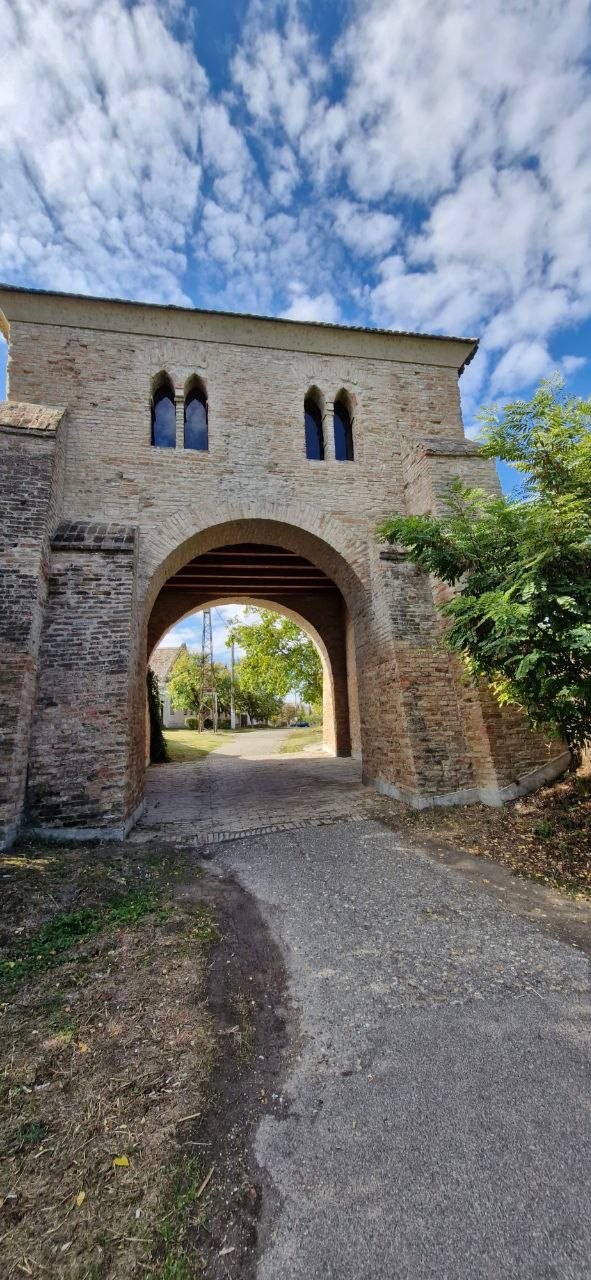
On the east side of the former suburb stands a brick gate tower, roughly square, with an arched passage. One storey survives above the passage, with two Gothic double windows; there was probably another. The gate had a movable bridge over a dug canal joined to the Mostonga meander; the canal, with an earth rampart and palisades, enclosed the suburb, where about thirty houses stand today (Vojvodina Travel, Srbija Danas). The sources do not give the year the gate was built.
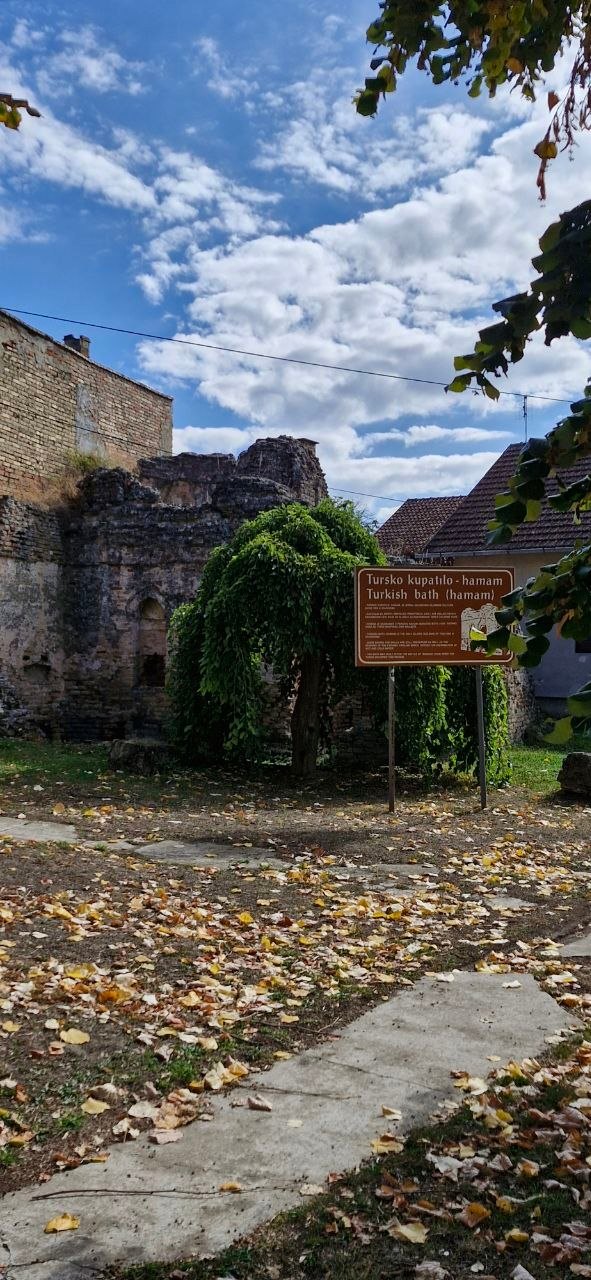
On the way from the fortress to the centre are the remains of an Ottoman bath, a hamam. It was most probably built after 1578, and Evliya Çelebi recorded it in 1665. Excavations show it had six rooms, among them a service room, a şadırvan (waiting room), a halvet (bathing room), a hazne (water tank) and a külhan (furnace room). Parts of the walls survive, with part of the dome over the central room and the clay pipes that brought in hot and cold water (Vojvodina Travel). Its restoration was announced back in 2019 (Danas).
Bač is about 15 minutes by car from Vajska (10.2 km). The Šiljak gate and the hamam are on the way between the fortress and the centre, and the Franciscan monastery is a few minutes further on. Opening hours, tickets and guided tours: Bač Tourist Organisation, Trg dr Zorana Đinđića 4, +381 21 60 72 222 (Vojvodina Travel). The fortress hosts Medieval Day in summer and European Heritage Days – Days of Bač in September (Bač Tourist Organisation).
Driving times from Vajska are approximate, calculated from OpenStreetMap data.
Nearby · About 6 minutes by car
The deepest lake in Vojvodina, left behind by a great Danube flood: beach, campsite and fishing.
Nearby · About 17 minutes by car
The monastery of the Assumption: Gothic, Romanesque and Classicist, with a working organ and a museum.
Nearby · About 5 minutes by car
An Orthodox monastery founded in 1478, with frescoes by Hristofor Žefarović and a legend of a healing spring.